Interested in sizes & availability?
DM "INFO" on Instagram/Facebook or email hello@artlo-design.com — and
let me know whether it’s for a private space or a hospitality project
(hotel/spa/holiday apartment).
The challenge of creating calm in a restless world
The best spaces don’t explain themselves. They work.
Not through loudness, but through details you feel more than you can name: light,
materiality, rhythm — and art with presence.
In hospitality design, it’s no longer only about furnishing — it’s about memory.
What guests take with them is rarely a single piece of furniture. It’s the feeling of
arriving. The exhale. The moment the room becomes quieter.
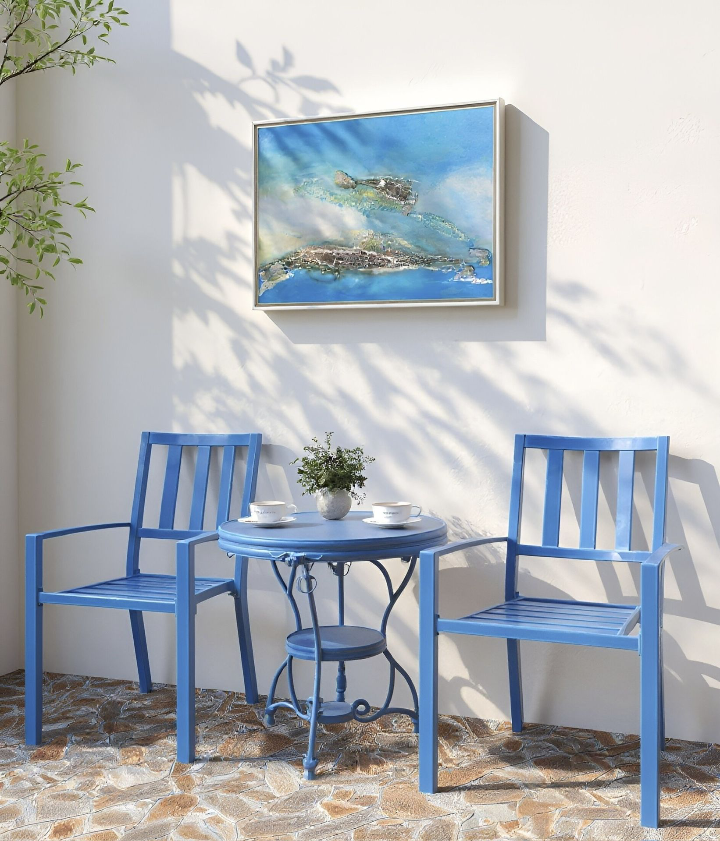
I’ve worked with these elements for more than 20 years: with light — and with
painting. In parallel.
What became visible as atmosphere in live events, I translate onto canvas in layers,
texture, and color: art that doesn’t just “match,” but carries a space.
And this is often the difference between a room that looks good — and a room that
stays:
Original art with surface. With depth. With presence.
Why textured abstraction works in hospitality design
1. It has physical presence
Some wall pieces are accompaniment. Textured originals are felt in a room — not
loud, but steady.
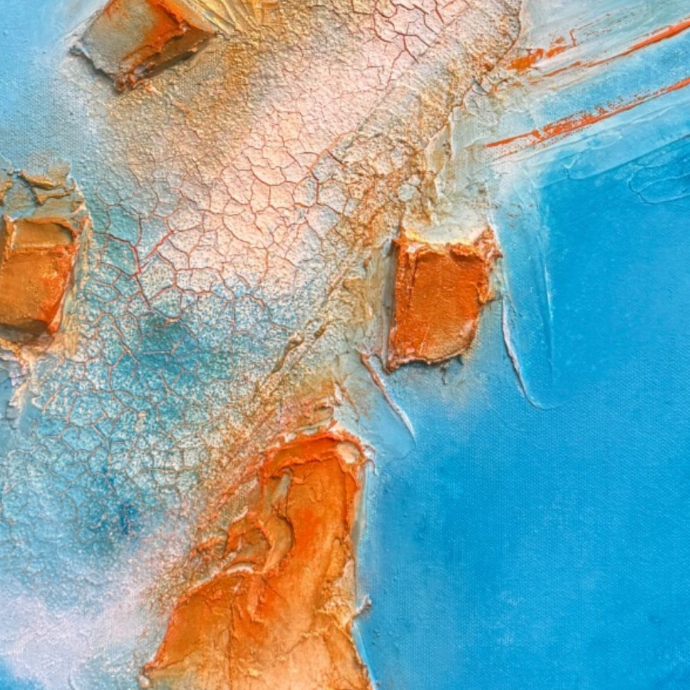
When structural paste dries on canvas, layers form, with fine cracks and edges. For
me, that’s part of the signature: a surface that holds light, breaks it, and gives it
back.
Many guests slow down without noticing. They look closer. Sometimes a hand hovers
for a moment, because the texture feels almost touchable.
And interior designers know: what feels tactile is more likely to be remembered.
In a suite meant to hold rest, or a spa where tension is allowed to release, this kind
of presence becomes part of the room’s effect — not decoration, but a quiet anchor
in the space.
2. It changes with light
Texture isn’t only visible — it responds. Depending on time of day, viewing angle,
and lighting, the same work can feel clearer in the morning, softer in the evening,
deeper in shadow.
In hospitality spaces, that matters: atmosphere isn’t static. A room lives — and art
that works with light makes it feel alive, without becoming restless.
That’s how moments emerge that guests don’t analyze, but experience: a subtle
shift, a new depth, a calm focal point.
And because light is never the same, the effect is never the same — that’s exactly
what makes the surface so compelling.
3. It communicates calm without having to explain a subject
In hospitality spaces, the goal is often a specific mood: arrival, openness, ease.
Abstraction can hold that without needing to be a “theme.”
Instead of prescribing a story, it leaves room for projection. Guests don’t have to
recognize anything. They can simply feel. And that’s precisely why it reads as
international, timeless, and suitable for many people — regardless of language or
background.
In a maritime palette, this works especially well: blue becomes depth. Light textures
become light. Gold brings warmth into the piece. The room stays calm — and still
gains character.
When presence and light come together, something happens that doesn’t feel
“decorated,” but like part of the place.
The Light of the Soul: An exhibition about pausing
My current exhibition at Link68 Art Gallery in Limassol (through February 20, 2026)
centers on the in-between:
the moments when nothing “more” happens — and something deeper still forms.
In a world that keeps moving forward, I’m drawn to the quiet zones: the pause
between two breaths. The place where movement doesn’t disappear, but settles.
The core works
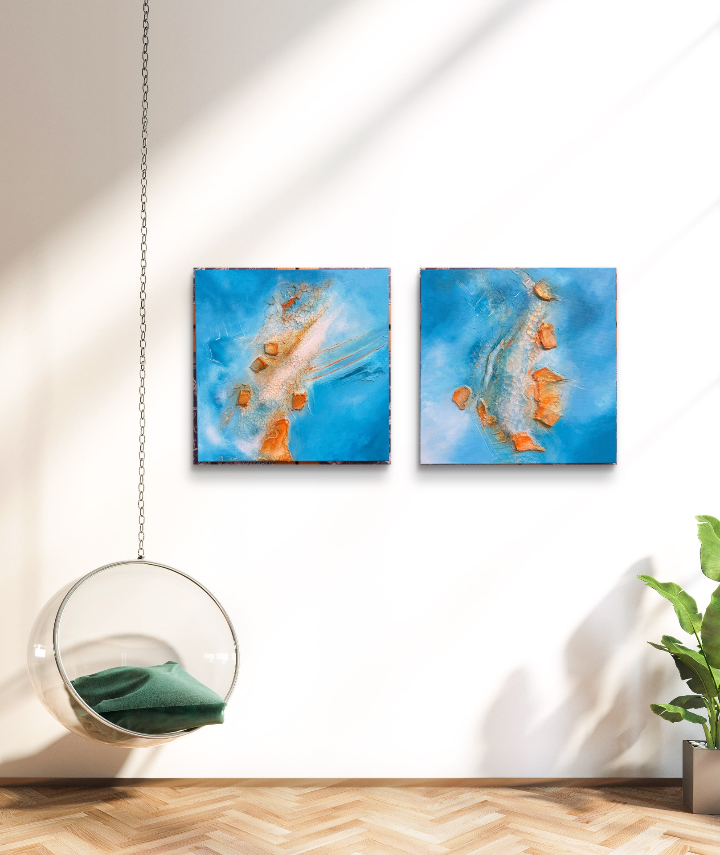
„Breathing Motion“ and „Breathing Stillness“ (both 50 × 50 cm) were created with
acrylic and structural pastes on canvas.
They are the first works I painted in 2026 — after an intense end of 2025.
One rests. One flows.
Each stands on its own. And yet together they show what a well-designed space can
allow: permission to be still — and the freedom to move.
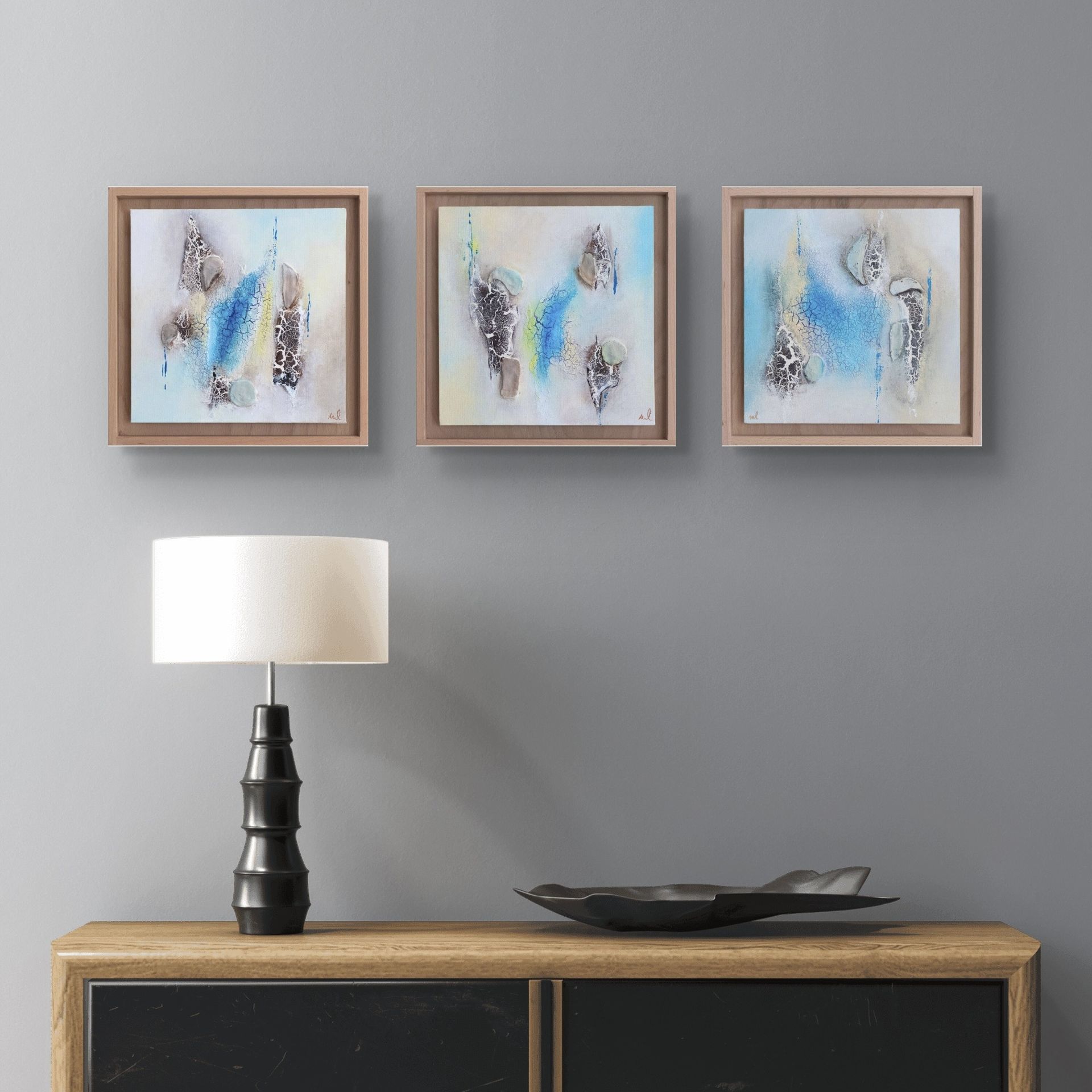
The “Found at the Beach” series — three smaller framed works (each 25 × 25 cm) —
carries the same tension into a different format:
Sculptural forms, inspired by what the Mediterranean leaves behind: fragments of calm, shaped in structural paste and soft coastal tones.
These works aren’t “decor.”
They are anchors for atmosphere.
When original art makes business sense
For boutique hotels
Guests rarely remember individual furnishings. They remember how it felt to arrive.
Original art can carry that feeling. It signals: this wasn’t just furnished — it was
intentionally designed. A place with character that doesn’t feel interchangeable.
Especially in Cyprus’ dynamic hospitality market — where boutique hotels and luxury
apartments compete on experience, not just amenities — identity often comes from
the details that create atmosphere.
For spa & wellness centers
If a space is designed for regulation and recovery (and the best wellness concepts
are), every element should support that goal.
Textured abstraction works because it:
enables visual rest
slows the gaze (the surface guides the eye)
uses calming palettes (blues, coral, earth and sand tones)
connects to natural processes (water, erosion, time)
This isn’t an add-on. It’s part of the environment that works.
For private residences
High-end buyers aren’t only buying square footage. They’re buying refuge.
Original art — especially work with depth, texture, and presence — can move a room
from “finished” to truly considered.
And texture makes each piece unmistakable: no surface is made twice. Light falls
differently every time.
For clients who value exclusivity, that’s the point: there is only one of this work.
The Process: Why texture takes time
I work in layers. Always.
First, the base: acrylic builds color depth, movement, and the underlying mood.
Then the texture — not with one material, but with different structural pastes that
behave differently:
one cracks as it dries, leaving an organic, unpredictable pattern
another can be shaped and modeled, almost sculptural
another is more pasty and quiet in its surface — for softer transitions
I don’t try to control everything. I set the frame — and allow the materials to find
their own surface. That’s exactly why each work is unique.
In further layers, depending on the piece, I bring in paper and spray paint — not as
an effect, but as part of the visual language: to deepen space, break edges, or add
another level.
In the end, it’s not about “perfect.” It’s about a surface that lives — and triggers
something in a room: calm, openness, presence.
If you’d like to see how a piece a piece might feel in your space, feel free to send me a photo or a moodboard. I can then recommend what size and overall mood would fit best.
Designing calm: practical considerations
Scale & proportion
Original art works best when it has room to breathe.
Too small in a large room — it disappears.
Too large in an intimate room — it overwhelms.
As a guideline (always depending on the wall, sightlines, and furniture layout):
Hotel suites: 50 × 50 cm to 80 × 80 cm often works very well above beds or seating areas
Lobbies / reception: 100 × 100 cm or larger creates a calm, clear focal point
Treatment rooms / spa: smaller formats or series (e.g., 3 × 25 × 25 cm) keep the mood quiet without dominating
Placement & lighting
Texture lives through light.
Strong placements are often:
opposite windows, because the natural light changes during the day
near accent lighting, e.g. wall lights or spots that show structure and shadows
in areas where people naturally pause, e.g. seating areas, waiting areas, next to thebed
Better to avoid:
Direct, strong sunlight, because it pollutes colors and materials in the long run
Permanently high humidity without good ventilation, especially directly over water sources (materials are robust - but a room should not permanently put them "under stress")
Color integration
The maritime palette — blues, coral, and warm gray and sand tones — is highly versatile and pairs beautifully with:
Mediterranean materials (stone, limewash, warm neutrals)
minimalist Scandinavian interiors
Japandi (quiet forms, natural textures)
„coastal luxury“
modern neutral palettes
This versatility is intentional: the work should elevate your design, not compete with it.
Commissions: creating for your space
Alongside available works, I also take on commissioned projects when format,
palette, or the overall effect needs to be tailored to a space.
The process
1. Initial call
we discuss the space, the mood, materials, lighting, and the effect you want to create
2. Concept
I develop a clear direction and, if you’d like, I can share digital mockups so you can see how scale, color balance, and texture could work in the space. From there, we refine the details together.
3. Execution:
I build the work in layers and share brief updates as needed — so you can follow the process without it being over-explained.
4. Installation / hand-off:
Depending on the project, I support you with placement and mounting recommendations or coordinate with professional installers. With textured work, it’s especially important that the piece sits right in the space — and that the lighting works for it.
The best commissions don’t feel like “a new painting,” but like a piece that always
belonged to the room.
Cyprus context: why this matters now
Cyprus is changing — visibly, also in design.
New boutique hotels are opening in Paphos, Limassol, and Ayia Napa. Luxury
apartments speak to international buyers who expect European design standards.
And wellness concepts are making one thing clear: atmosphere isn’t optional — it’s
part of the offering.
What’s often missing is art that understands the Mediterranean context without
telling it literally.
No seascapes. No obvious symbols.
Instead: works that carry the feeling of water without depicting it.
Abstraction that communicates openness, calm, and light — quietly, but with
presence.
The exhibition “The Light of the Soul” presents selected works from my “Coastal Dreams” series — pieces that make coastal energy and light tangible without becoming a literal subject.
See the work in person
“The Light of the Soul” is on view at Link68 Art Gallery in Limassol from January 20 to February 20, 2026.
ocation:
Link68 Art Gallery Agkyras 68 , Limassol, Cyprus
Exhibition dates:
20. Januar - 20. Februar 2026
Opening reception:
Saturday, February 7, 2026 · 6:30 PM
(Interior designers & hospitality professionals especially welcome.)
If you’re working on a project and would like to see how textured abstractions translate in a real space, I’m also available—by appointment—for gallery viewings outside regular opening hours.
Available works & inquiries (selection)
Selected works:
„Breathing Stillness“
50 × 50 × 4 cm · acrylic & structural pastes on canvas A quiet piece about depth and pause — ideal for suites, retreat spaces, or private interiors.
„Breathing Motion“
50 × 50 × 4 cm · acrylic & structural pastes on canvas Movement without agitation — for spaces that need energy while remaining calm.
„Found at the Beach I–III“
25 × 25 cm each (framed) · framed works · acrylic & structural pastes on cardboard Sculptural forms in coastal tones — strong as a series, but equally effective on their own.
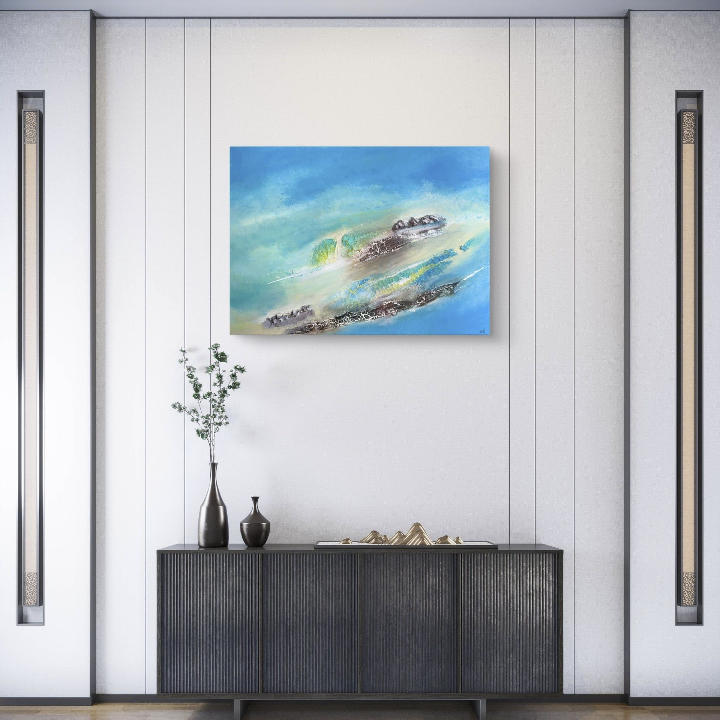
"From the Air I“
70 x 50 x 4 cm · crylic & structural pastes on canvas
Openness, light, and calm — seen from a different perspective.
Coastal Dreams Collektion
Various sizes · maritime abstractions in blues, coral, and earth tones
Ideal for holiday apartments, beachfront hotels, and residential projects.
For interior designers & hospitality projects
Formats: various sizes (depending on the work)
Medium: acrylic + structural pastes on canvas, panel, or paper (original works, one of a kind)
Guidance: placement and spacing advice based on room photos or a moodboard
Commissions: possible (tailored to format, palette, materiality, and the project’s atmosphere — within my abstract visual language)
Logistics: depending on location and project timeline
Contact
For available works, commissions, or project consultations:
email: hello@artlo-design.com
Website: www.artlo-design.com
Instagram: @artlo_design
Closing thoughts: why atmosphere matters
We all know spaces that feel purely functional.
Hotel rooms that could be anywhere. Waiting areas designed for efficiency, not experience.
And we know spaces that feel different — held, considered, calm.
Spaces where attention was paid to how light falls, how the eye moves, how materials respond — and how the room feels in the body.
Art is part of that language.
Not as an afterthought. Not as “something for the wall.”
But as a conscious decision about the atmosphere you want to create.
Textured abstraction is quiet. It doesn’t demand attention.
It invites a pause. It rewards looking closely. And it changes with the light — and with the space.
In hospitality, wellness, or residential design, that’s the kind of presence that lasts.
About the artist
Marleen is a self-taught mixed-media artist from Germany, now based in Paphos, Cyprus.
She has been painting for over 20 years and has, in parallel, built extensive experience in live-event lighting — a combination that continues to shape her work today, with a strong focus on light, surface, and atmosphere.
Her maritime-inspired abstract works have been exhibited internationally and are held in private and commercial collections across Europe and Cyprus.
Marleen works with interior designers, architects, and private clients on projects where art doesn’t merely complement a space — but makes it felt.